The Healing Power of Sound: What Happens During a Sound Bath?
From singing bowls to sound baths, discover how vibration, stillness, and intentional listening can create space for relaxation, reflection, and connection.
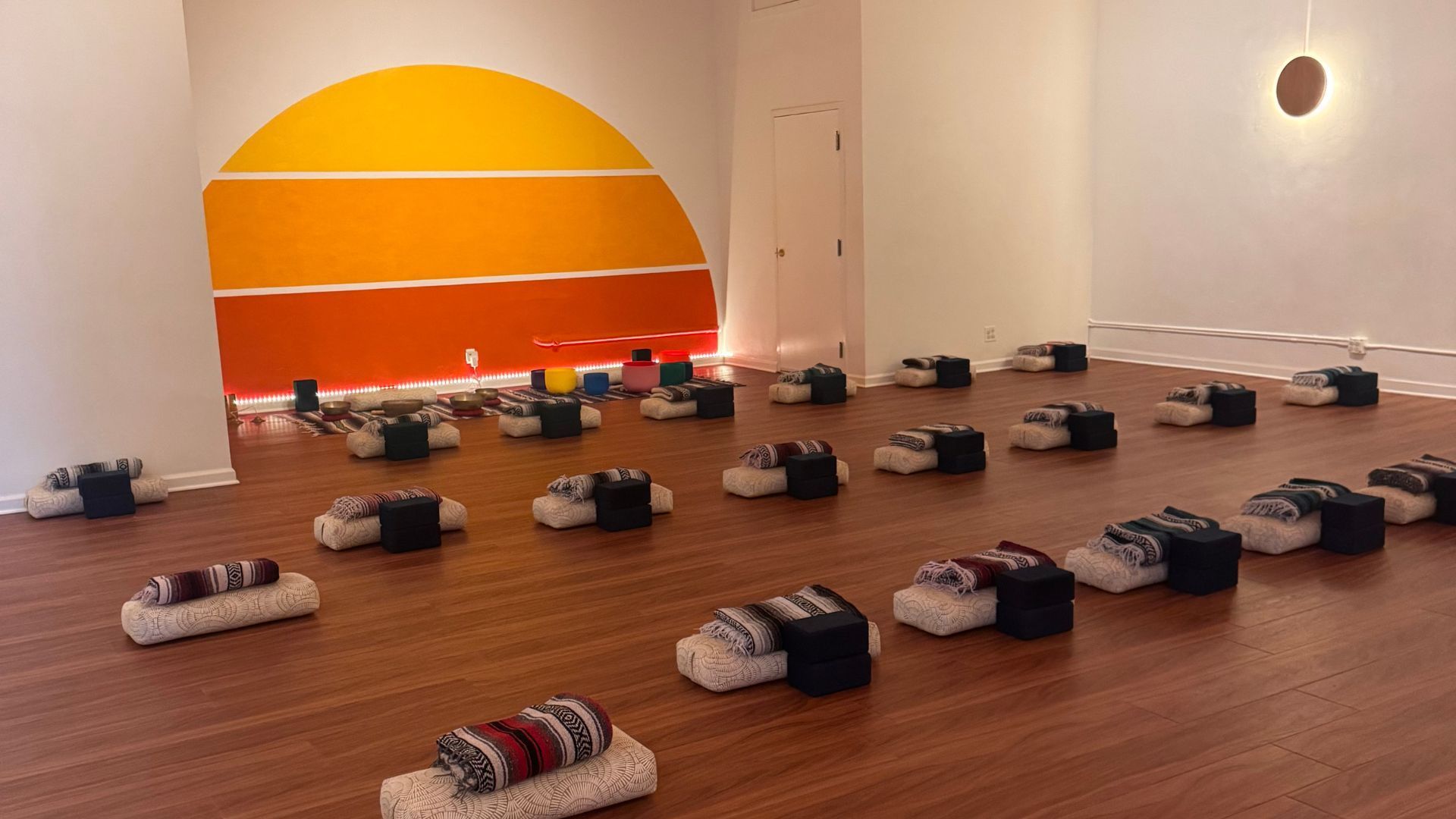
Imagine walking into a softly lit room. Yoga mats are arranged across the floor. Blankets and bolsters invite you to get comfortable. At the front of the room, a collection of beautiful singing bowls waits quietly. You settle onto your mat, close your eyes, and take a breath. Then, a single note fills the room. It lingers, gently fading into silence, before another sound begins. For the next several minutes, there's nowhere you need to be. Nothing you need to accomplish. No movement to perfect. Just an invitation to listen.
Welcome to the world of sound baths and sound healing.
At Sol Seek, we believe wellness isn't always about doing more. Sometimes, it's about creating space to do less. And sound can be a beautiful way to begin.
What Is a Sound Bath?
A sound bath is an immersive listening experience in which instruments such as singing bowls, gongs, chimes, and other resonant instruments are played to create a layered soundscape. Despite the name, there's no water involved. Instead, you're surrounded by sound.
Most sound baths invite participants to lie down or sit comfortably while a facilitator plays instruments in a thoughtful sequence. Unlike a traditional yoga class, there's typically little or no physical movement required. You simply listen, notice, and allow yourself to experience the sounds as they unfold.
Some people describe the experience as deeply relaxing. Others notice emotions, physical sensations, wandering thoughts, or moments of quiet reflection. And some simply enjoy the music-like quality of the instruments. There's no single correct response.
What Are Singing Bowls?
Singing bowls are instruments that produce sustained, resonant tones when struck or played around their rim with an appropriate mallet. Two types are especially common in contemporary sound bath experiences.
Crystal Singing Bowls
Crystal singing bowls are typically made from quartz-based material and are known for their clear, sustained tones. Their sounds can overlap and blend, creating rich combinations of pitches and harmonics. Depending on how they're played, crystal bowls can produce everything from delicate, shimmering sounds to powerful, room-filling resonance.
Metal Singing Bowls
Often associated with Himalayan singing bowl traditions, metal bowls are typically made from metal alloys. They produce complex sounds containing multiple frequencies and overtones. Their tones may be experienced as warm, textured, or gently pulsating.
Both types of bowls can be used in sound meditation, and neither is inherently more healing than the other. The experience depends on many factors, including the instrument, the facilitator, the environment, and the listener.
How Does Sound Healing Work?
To understand sound healing, it helps to begin with something simple. Sound is vibration.
When a singing bowl is played, it vibrates, creating pressure waves that travel through the air. Those waves reach our ears, where the auditory system converts them into signals that the brain interprets as sound. But hearing isn't just a mechanical process. Sound can also influence attention, emotion, memory, and our sense of the surrounding environment.
Think about how a familiar song can bring back a memory, how ocean waves can feel soothing, or how an unexpected loud noise can make you jump. Our relationship with sound is both physical and deeply personal.
During a sound bath, the combination of sustained tones, changes in volume, silence, and focused listening may help create conditions that support relaxation. For some people, sound becomes an anchor for attention, much like the breath during meditation. Instead of trying to quiet the mind, you simply give it something to listen to.
What Are the Benefits of a Sound Bath?
Research into sound baths and singing bowl meditation is still developing, but early studies suggest several possible benefits.
1. Relaxation and Stress Reduction
One of the most commonly reported experiences during a sound bath is relaxation.
A 2017 observational study published in the Journal of Evidence-Based Complementary & Alternative Medicine examined participants' responses to singing bowl meditation and found reductions in self-reported tension, anger, fatigue, and depressed mood following sessions.
While these findings are encouraging, the study did not establish that singing bowls alone caused the improvements. Still, they suggest that sound-based meditation may be a useful relaxation practice for some people.
2. Mindfulness and Present-Moment Awareness
Meditation can feel intimidating, especially when someone believes they need to stop thinking completely.
A sound bath offers a different approach. Rather than trying to eliminate thoughts, you're invited to listen. You might notice the beginning of a note, the way it changes, and the moment it disappears. And when your attention wanders? You simply return to the sound.
This process resembles other forms of mindfulness practice, where attention is gently redirected to a chosen point of focus.
3. Emotional Reflection
Sound can evoke emotions, memories, and associations.
During a sound bath, some people experience a sense of peace, while others notice unexpected feelings or thoughts. These responses are personal and don't necessarily indicate that a particular frequency is releasing stored emotions or trauma. Instead, the quiet environment and focused attention may create an opportunity to notice experiences that are easy to overlook during a busy day.
4. A Restful Pause
Our days are often filled with notifications, conversations, responsibilities, and constant stimulation.
A sound bath offers something increasingly valuable: uninterrupted time. Time to rest. Time to listen. Time to be present without needing to produce, accomplish, or perform. And sometimes, that alone can feel restorative.
Do Different Singing Bowl Frequencies Have Different Healing Properties?
You may have heard claims that certain frequencies correspond to specific chakras, organs, emotions, or states of consciousness. For example, some sound healing traditions associate particular notes with the body's energy centers, while modern wellness practices sometimes reference frequencies such as 432 Hz or 528 Hz.
These associations can have symbolic or spiritual significance for practitioners.
However, there isn't strong scientific evidence that a particular singing bowl frequency reliably heals a specific organ, repairs DNA, or produces a predictable emotional response.
The effects of sound are more complex than a single number. Volume, rhythm, harmonics, personal associations, attention, and the listening environment can all shape the experience.
At Sol Seek, we believe it's possible to appreciate the beauty and meaning of sound without making promises that science hasn't established. The experience can be meaningful simply because it invites us to slow down, listen, and reconnect.
What Happens During a Sound Bath at Sol Seek?
Sound bath experiences may vary depending on the teacher, workshop, or class. Some are offered as dedicated sound meditation sessions. Others combine sound with practices such as Yin yoga, restorative postures, or guided relaxation.
A typical experience may begin with a few moments of settling in. Your facilitator might invite you to notice your breathing, set an intention, or simply become comfortable. As the instruments begin, you're encouraged to listen without needing to analyze or interpret every sound. Different tones may overlap. Some sounds will be soft and subtle, while others may be more resonant.
There may be moments of silence, too. And those quiet spaces can be just as meaningful as the sounds themselves. At the end, you'll have time to gradually return your attention to the room before continuing with your day.
Do I Need to Know How to Meditate?
Not at all. In fact, sound baths can be a welcoming introduction to meditation for people who find traditional silent practices challenging. You don't need to know any special breathing techniques. You don't need to sit perfectly still. And you certainly don't need to empty your mind. If you find yourself thinking about your grocery list halfway through, congratulations. You're human. Simply notice where your attention has gone and return to listening when you're ready. That's part of the practice.
What Should I Bring to a Sound Bath?
Comfort is key. Most sound bath participants choose to lie down, so consider bringing or using:
- A yoga mat
- A blanket for warmth
- A bolster or pillow for support
- Comfortable clothing
- An eye pillow, if you enjoy using one
You can also participate while seated or in another comfortable position. If you're sensitive to sound, experience tinnitus or migraines triggered by noise, or have concerns about participating, speak with the facilitator beforehand.
Sound baths should never require you to tolerate painful or overwhelming volume. And if you need to adjust your position, open your eyes, or step outside, that's always okay.
Is Sound Healing the Same as Music Therapy?
No! Sound baths are generally wellness or meditation experiences offered by sound practitioners. Music therapy, on the other hand, is a clinical discipline in which credentialed music therapists use music-based interventions to address individualized therapeutic goals.
While both involve sound, they differ in training, scope, and purpose. A sound bath may be a meaningful addition to someone's self-care routine, but it shouldn't be presented as a replacement for medical care, psychotherapy, or clinical music therapy.
Sound Baths and Yoga: A Beautiful Combination
Sound and yoga share something essential. Both invite us to become more aware of the present moment. In a dynamic yoga class, we may focus on coordinating movement with breath. In Yin yoga, we explore stillness and sustained postures. During a sound bath, listening becomes the center of attention. Combining these practices can create a unique experience.
Imagine settling into a supported Yin posture while the gentle tones of singing bowls fill the room. Rather than moving from one activity to the next, you're invited to remain present, noticing your breath, your body, and the sounds around you. For many students, this combination offers a welcome contrast to the pace of everyday life.
The Beauty of Simply Listening
We spend so much of our lives doing. Planning. Working. Moving. Responding. Thinking about what comes next. And while there's value in all of that activity, there's also something beautiful about creating space for stillness.
A sound bath doesn't require you to become someone different.
It doesn't ask you to be more flexible, stronger, calmer, or more accomplished. It simply offers an invitation. To listen. To notice. To rest. And perhaps to discover that you don't always need to do more to experience something meaningful.
Experience Sound Healing at Sol Seek
At Sol Seek, we love creating experiences that invite our community to explore movement, mindfulness, and connection in different ways. From sound baths to Yin yoga and sound experiences, our offerings create opportunities to slow down and discover new dimensions of your practice.
Whether you're curious about singing bowls, interested in meditation, or simply looking for a little space to unwind, you're welcome here.
Ready to experience the power of sound?
Explore our upcoming sound baths, Yin and sound classes, and special events at Sol Seek Yoga in Manhattan Beach and Santa Barbara. Come as you are. Listen with curiosity. Seek your stillness.
Sol Seek Yoga | Manhattan Beach • Santa Barbara
May all beings be happy + free. ☀️
Recent Posts