What Is Yin Yoga? The Art of Slowing Down
Less is More!
We live in a world that celebrates doing more. More productivity. More movement. More accomplishments. More things checked off the list. Even our workouts often encourage us to push harder, move faster, and sweat more. But what if the most meaningful thing you could do for yourself today was slow down? Not because you're tired. Not because you're giving up. But because slowing down is a practice worth cultivating.
Welcome to Yin yoga.
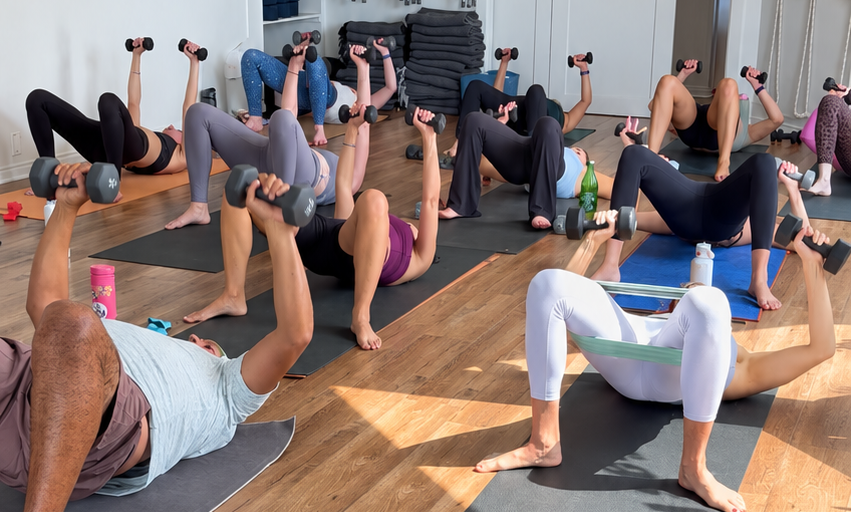
At Sol Seek Yoga, we believe there's room for every kind of movement. The energizing Flow classes that build heat and strength. The challenging fitness classes that leave you feeling accomplished. And the quieter practices that invite you to turn your attention inward. Yin yoga is one of those practices. And while it might look simple from the outside, there's a whole lot happening beneath the surface.
What Is Yin Yoga?
Yin yoga is a slow, contemplative style of yoga in which poses are typically held for several minutes. Unlike more dynamic yoga styles, where movement flows from one posture to the next, Yin encourages you to settle into a position, find an appropriate level of sensation, and remain there with mindful attention.
Many Yin poses are practiced seated or lying down, often with the support of props such as bolsters, blocks, and blankets. The emphasis isn't on achieving the deepest possible stretch. It's on finding a sustainable position where your body can gradually adapt to the experience of stillness. And perhaps more importantly, where your mind can begin to settle, too.
Why Is It Called Yin Yoga?
The name comes from the concept of yin and yang, two complementary qualities found in traditional Chinese philosophy. Yang is often associated with activity, warmth, movement, and energy. Yin is associated with stillness, receptivity, coolness, and rest. Neither is better than the other. Both are necessary.
Think about the rhythm of your day. There are moments when you need energy, focus, and action. And there are moments when you need quiet, reflection, and recovery.
Yin yoga invites us to explore that quieter side of the equation. It doesn't ask us to abandon effort. It simply reminds us that effort and rest can coexist.
How Is Yin Yoga Different From Flow Yoga?
If you've taken a Flow class, you're probably familiar with moving through postures in coordination with your breath. Yin yoga offers a different experience.
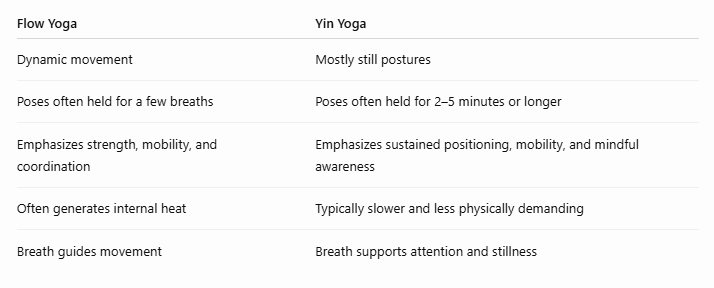
Both styles are valuable. And they can complement each other beautifully. A dynamic Flow practice may help you build strength and move through a full range of motion. Yin offers an opportunity to explore comfortable, sustained positions and notice how your body responds over time. The key is finding a balance that supports your needs.
What Happens to Your Body During Yin Yoga?
One of the most common explanations of Yin yoga is that it targets the body's connective tissues, particularly fascia. Fascia is a network of connective tissue found throughout the body, surrounding and supporting muscles, organs, and other structures.
During a Yin practice, sustained positions create gentle mechanical loading in various tissues. However, it's important to distinguish the traditional language of Yin yoga from what research has established. We can't reliably claim that holding a particular pose for several minutes permanently lengthens fascia, breaks up adhesions, or produces a specific structural change.
What we can say is that gentle, appropriately supported stretching may help improve range of motion and stretch tolerance over time. And for many practitioners, the experience of slowing down and paying attention to physical sensations is just as valuable as the movement itself.
Yin isn't about forcing your body to open. It's about learning to listen.
What Are the Benefits of Yin Yoga?
Yin yoga may offer several benefits, particularly as part of a balanced movement and mindfulness routine.
1. Improve Flexibility and Mobility
The sustained positions in Yin yoga may help improve flexibility and comfortable range of motion. Because you spend more time in each posture, you have an opportunity to notice tension and adjust your position gradually. But remember: deeper isn't necessarily better. The goal is comfortable, sustainable movement — not reaching the maximum possible stretch.
2. Support Relaxation and Stress Management
Yin yoga creates an environment that encourages you to slow down. The combination of quiet, mindful breathing, and sustained postures may support relaxation and help reduce perceived stress. While individual responses vary, many students find the slower pace offers a welcome contrast to their busy days.
3. Develop Mindfulness
In a dynamic Flow class, your attention may naturally follow the sequence of movement. In Yin, there's often less to do. And that can make the mind's activity much more noticeable. You might find yourself thinking about your schedule, replaying a conversation, or wondering how much longer you'll be in a pose. That's okay. The practice isn't about eliminating thoughts. It's about noticing them without needing to follow every one. Then, gently returning your attention to your breath or your body.
4. Complement More Active Exercise
If you enjoy running, cycling, strength training, HIIT, or Flow Yoga, Yin can provide a slower movement experience within your weekly routine. It's not a replacement for strength training, cardiovascular exercise, or other forms of movement. Instead, it offers a different opportunity to explore mobility, body awareness, and relaxation. Sometimes the most supportive thing you can add to an active lifestyle isn't another high-intensity workout. It's a little more balance.
5. Create Space for Reflection
One of the less tangible benefits of Yin yoga is the opportunity to spend time with yourself. Without constant movement or distraction, you may notice thoughts, emotions, or physical sensations that usually get lost in the busyness of the day. There's no requirement to interpret those experiences or make them mean something. Sometimes, simply noticing is enough.
Is Yin Yoga the Same as Restorative Yoga?
No! Although both practices are slow and often use props, they have different intentions. Yin yoga generally involves settling into postures that create a mild to moderate stretching sensation, then remaining there for an extended period. Restorative yoga typically uses generous support to minimize physical effort and encourage comfortable rest.
In a Restorative class, the goal may be to feel almost completely supported by your props. In Yin, you may experience some sensation as you explore the posture. Both practices can be deeply nourishing. And both remind us that yoga doesn't always have to be physically demanding to be meaningful.
Is Yin Yoga Good for Beginners?
Absolutely. You don't need prior yoga experience to try Yin. You don't need to be flexible. And you don't need to know the names of the poses. A good Yin class offers modifications and props so you can find positions that work for your body.
One important thing to understand is that Yin should not be painful. You may feel a gentle or moderate stretching sensation, but sharp pain, tingling, numbness, or joint discomfort are signs to adjust or leave a pose. If you have an injury, joint instability, or a medical condition that affects your movement, speak with your healthcare professional and instructor about appropriate modifications.
Remember, your body is not a problem to solve. It's something to care for.
What Should You Expect at Your First Yin Yoga Class?
If you've never taken Yin, here's what you can expect.
A Slower Pace
You won't be moving continuously through a sequence. Instead, your teacher will guide you into a posture and invite you to settle in.
Longer Holds
Most poses are held for several minutes, although the length can vary depending on the class and the individual. Your teacher may offer modifications or encourage you to change positions when needed.
Plenty of Props
Blocks, bolsters, and blankets can help support your body. Using props isn't a sign that you're doing less. It's often a way to practice more intelligently.
Time for Stillness
You may spend several minutes simply noticing your breath, your sensations, or the sounds around you.
For some people, this feels immediately relaxing. For others, it takes practice. Both experiences are normal.
A Different Kind of Challenge
Here's something that surprises many first-time Yin students: Stillness can be challenging. When there's nowhere to rush and nothing to accomplish, we sometimes become more aware of how accustomed we are to constant activity. Yin offers an opportunity to practice being present without needing to change every moment.
Why We Love Combining Yin and Sound
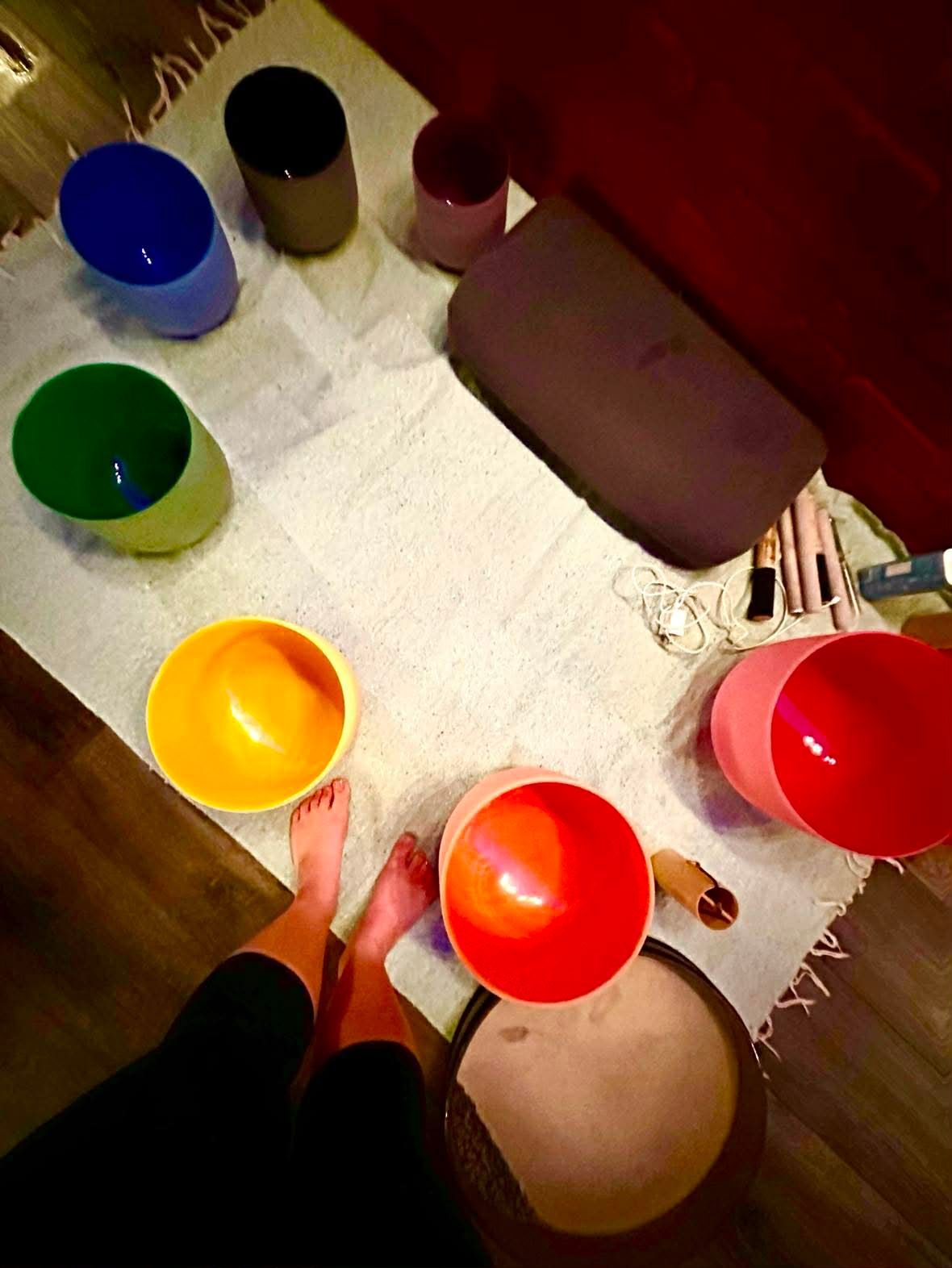
At Sol Seek, some of our Yin experiences incorporate sound healing, including singing bowls and other resonant instruments. And it's a beautiful pairing. While Yin encourages physical stillness and mindful awareness, sound can provide an additional focus for attention. As you settle into supported postures, the tones of singing bowls may help create an atmosphere that feels calming and immersive. Rather than trying to quiet your mind through effort, you can simply listen. The sounds rise. They linger. They fade. And you return to your breath.
Sound healing isn't a medical treatment, and research into its specific effects is still developing. But for many students, the combination of gentle movement, stillness, and intentional listening is a meaningful wellness experience.
How Often Should You Practice Yin Yoga?
There's no universal rule. Some people enjoy Yin once a week as a complement to more active classes. Others incorporate shorter sessions several times a week. The right frequency depends on your goals, comfort, physical condition, and overall movement routine. If you're new to Yin, starting with one class per week can be a gentle introduction. Notice how you feel during and after class. Over time, you can discover how the practice fits into your life.
The Art of Doing Less
There's something almost rebellious about slowing down in a world that constantly asks us to do more. To sit still. To breathe. To stop measuring every moment by what we accomplish.
Yin yoga offers a reminder that not every moment needs to be productive. Not every sensation needs to be fixed. Not every thought needs an answer. And not every practice needs to leave you sweaty and exhausted to be worthwhile. Sometimes the most meaningful thing you can do is create a little space. Space to notice. Space to soften. Space to simply be.
Experience Yin Yoga at Sol Seek
At Sol Seek Yoga, we believe every practice has its place. Some days call for strength and movement. Others call for stillness and reflection.
Our Yin yoga classes invite you to explore a slower, more contemplative approach to movement in a welcoming community environment. Whether you're completely new to yoga or looking to balance a more active Flow practice, there's a place for you on the mat. And if you're curious about combining Yin with sound, keep an eye on our schedule for special Yin and Sound Bath experiences.
Ready to slow down?
Explore Yin yoga classes and upcoming events at Sol Seek Yoga in Manhattan Beach and Santa Barbara. You don't have to do more to discover more. Sometimes, all you need to do is be.
Sol Seek Yoga | Manhattan Beach • Santa Barbara
May all beings be happy + free. ☀️
Recent Posts